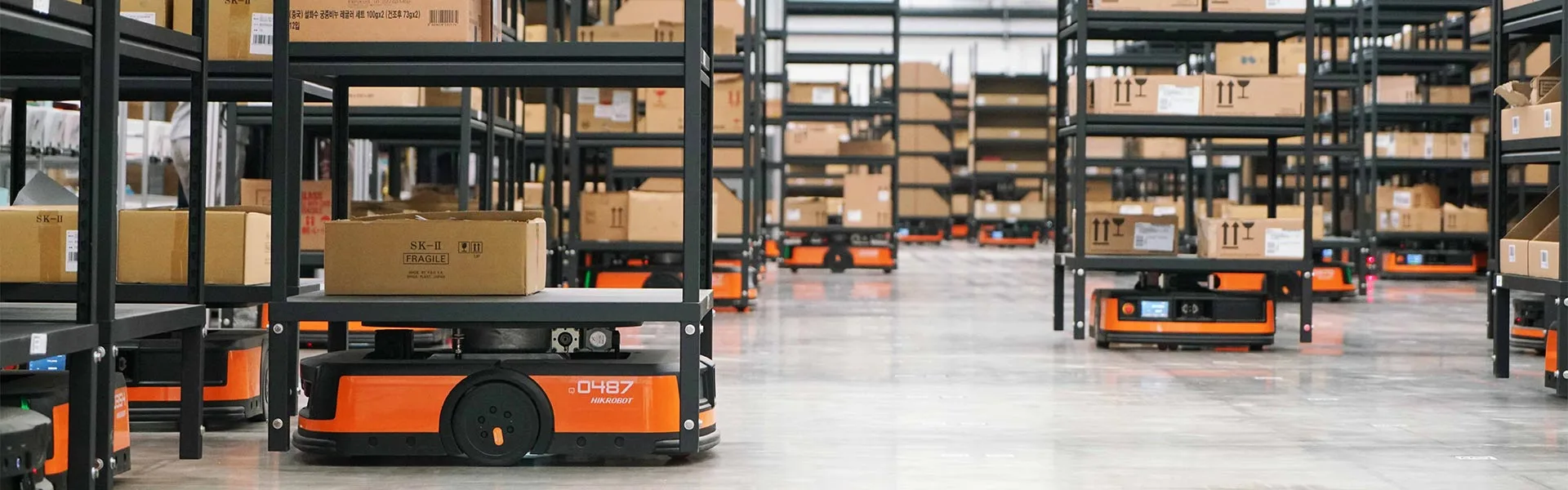

Most warehouses waste weeks on meetings and quotations before knowing if AGVs make financial sense. Use this quick ROI estimator to get a realistic payback range first, then validate it on-site with our demo unit if the numbers look promising.
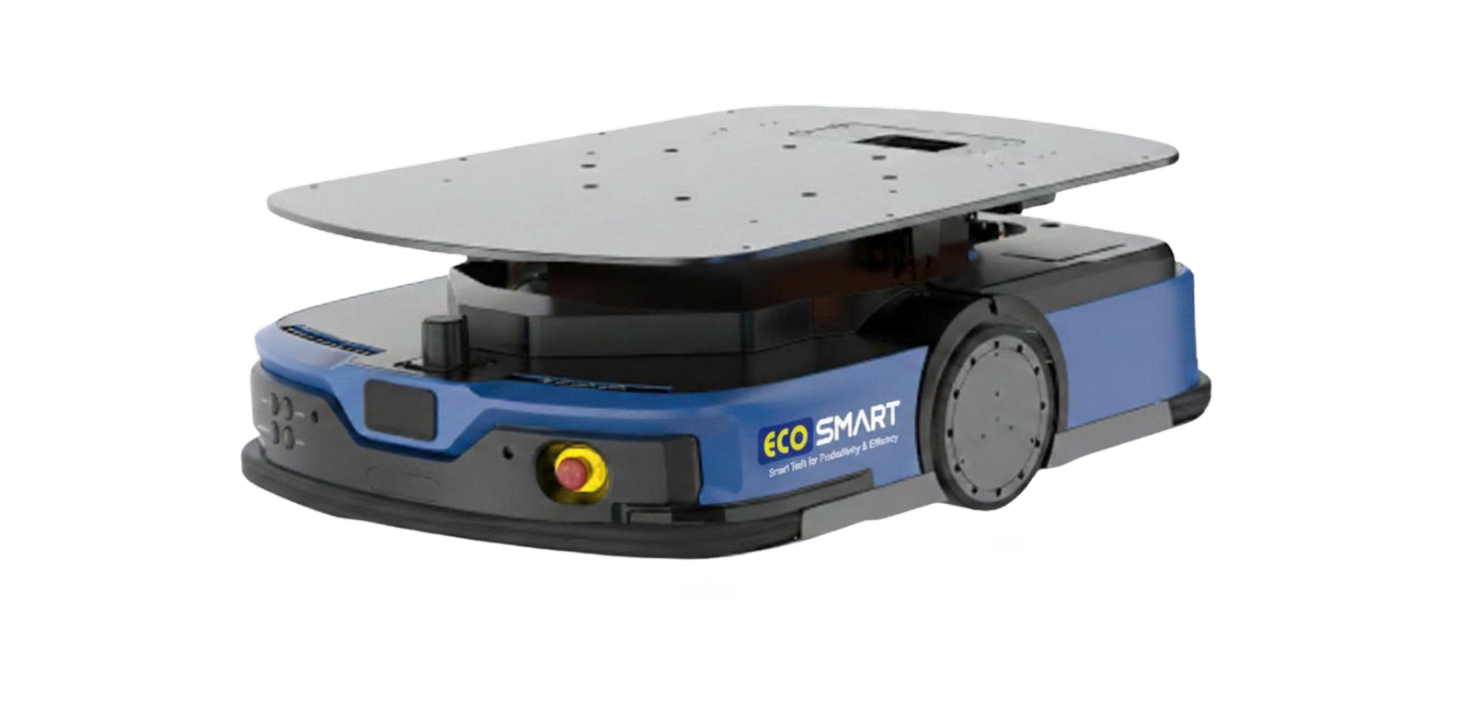
What is an Automated Guided Vehicle (AGV)?
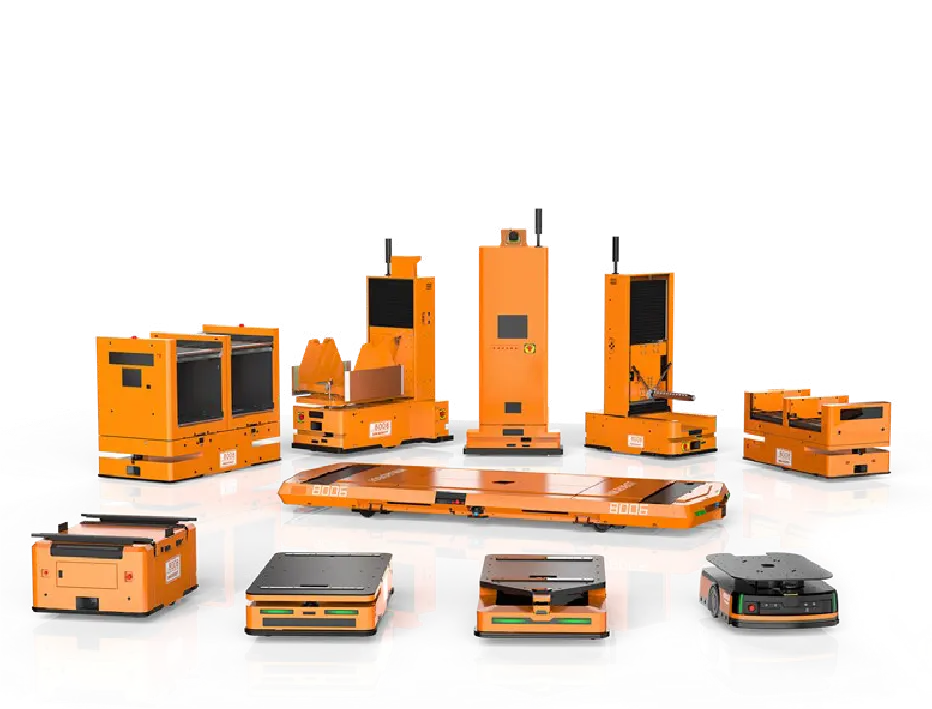
AGV Robot is a warehouse transport robot that automatically moves materials to reduce manpower dependency, delays, and movement errors.
Best-fit outcomes for manufacturing warehouses

Increase throughput

Reduce labor dependency

Safer, more predictable flow
If your warehouse handles frequent, repetitive material movement, an AGV (Automated Guided Vehicle) can help you move faster with fewer mistakes, without relying heavily on manpower and forklifts.
What an AGV can improve in your warehouse?
RUNNING 2+ SHIFTS?
This is where AGVs usually win…
When your warehouse runs longer hours, utilization goes up, and utilization is the biggest driver of payback. That is why multi-shift sites often see faster ROI than single-shift operations, assuming the routes are repetitive and stable.
|
2 – 3 Shift Many warehouses |
ROI ~24 months
Depending on workload and layout |
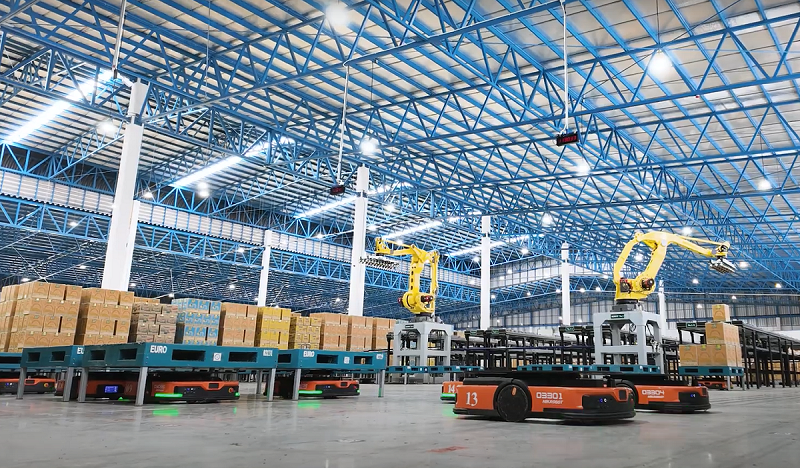
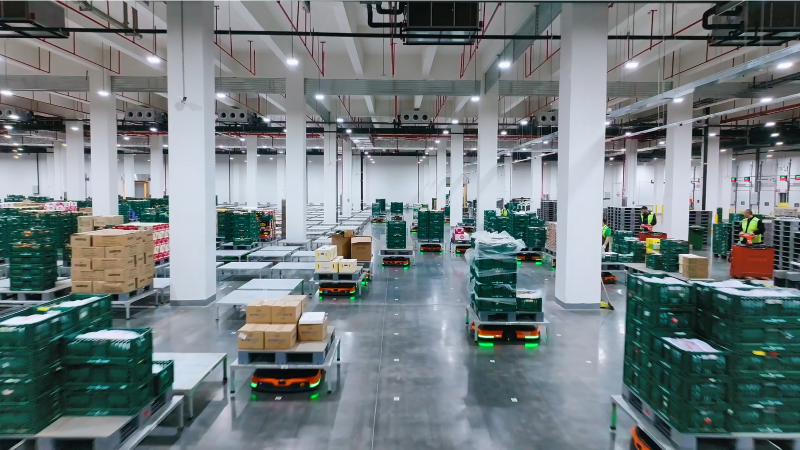
How it works
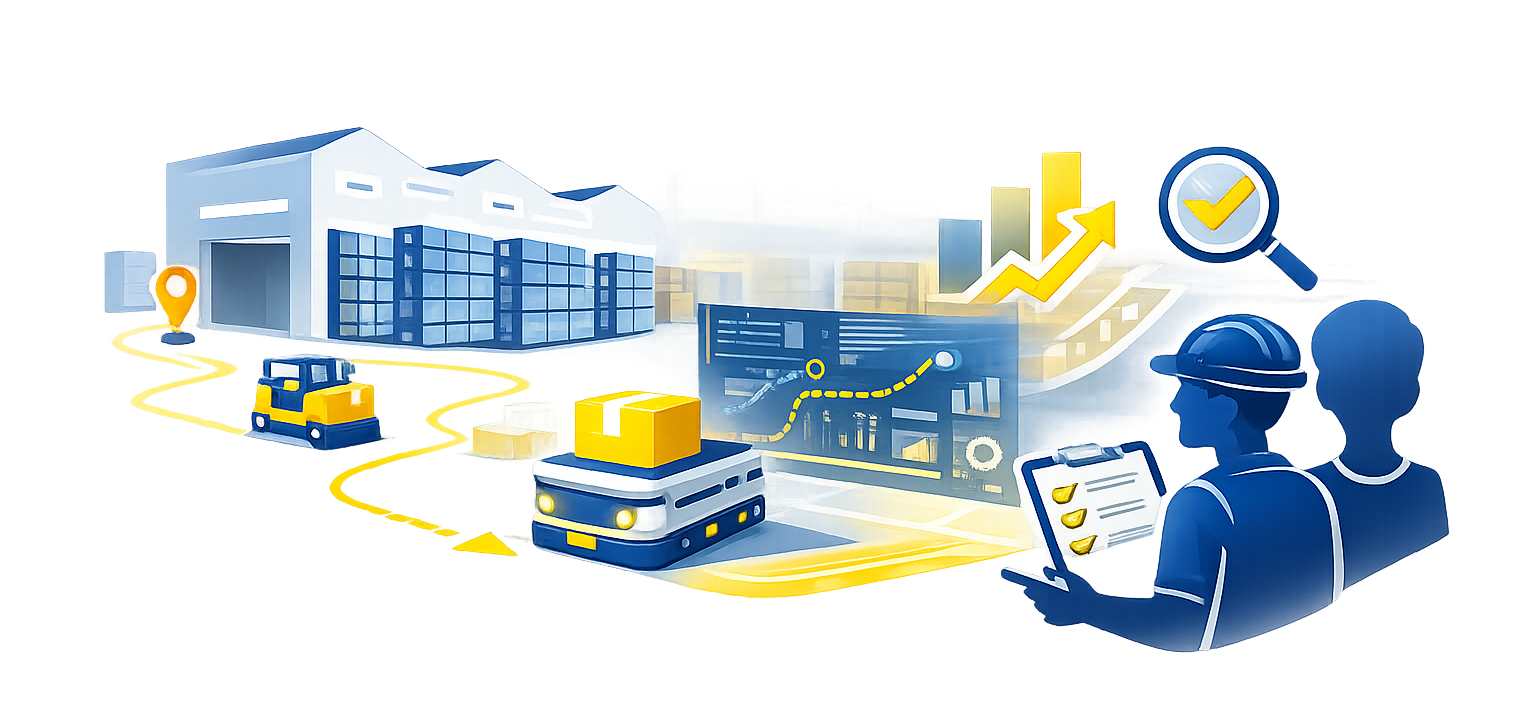
Estimate ROI first, then validate on-site
Every warehouse is different. The same AGV can deliver very different ROI depending on distance, movement volume, routes, and shifts.
Start with an ROI estimate based on your actual operating conditions, then validate on-site if the numbers look promising.
Validate your ROI in your real warehouse
(Demo Unit On-Site)
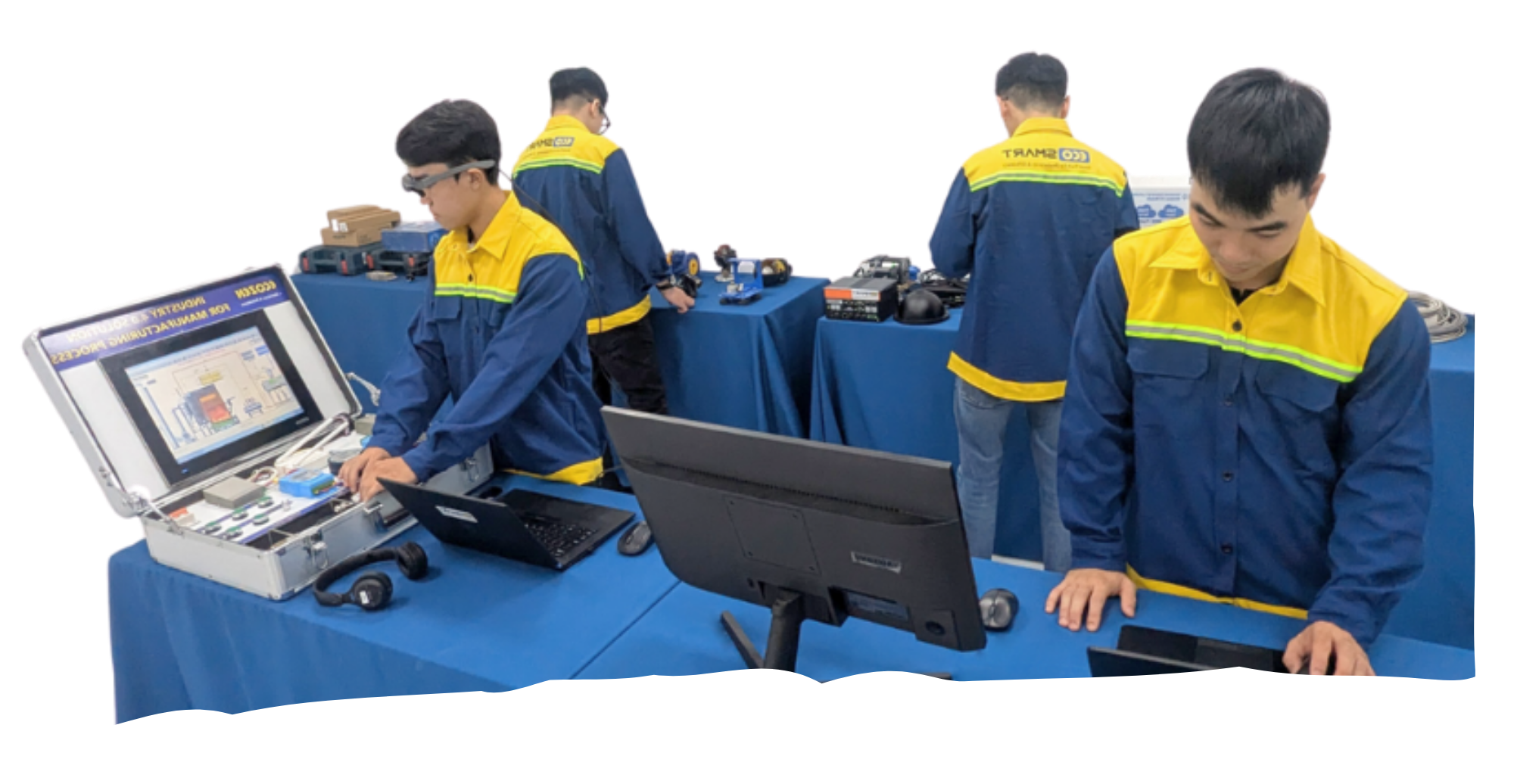
If your estimate looks promising, we can run an on-site validation using our demo unit to confirm routes, task patterns, constraints, and expected performance. This helps you decide based on real conditions, not assumptions.
After-sales support matters more than the robot
Automation only works long-term when support and maintenance is reliable. We provide dedicated servicing and repair support to keep your operation stable after deployment.
CASE STUDY
CASE STUDIES: Forklift Driver Replacement (The Real Cost and Why AGVs Make Sense)
If your warehouse runs repetitive point-to-point movements, the forklift driver cost is rarely just “salary.” Once you include shift coverage and operational losses (waiting, congestion, rework), the true monthly cost rises quickly, especially in 2–3 shift operations.
What an AGV changes?

Replaces repetitive forklift driving on fixed routes with consistent, predictable movement flow

Reduces manpower dependency during peak hours and shift changes

Cuts waiting time, congestion, and handling errors that typically inflate cost per move

Improves safety by reducing forklift traffic pressure in tight aisles and intersections
Cost Reality Check
(Example model per forklift route))

Forklift rental
13M VND/month
Driver base salary
8M VND / month
Overtime
4M VND/month
Insurance/statutory 1,92M VND/month
13th month bonus
0.67M VND/month
13th month salary
0.67M VND/month
Off-day allowance
0.67M VND/month

Baseline total (forklift + driver)
28,930M VND/month
2-shift operation: why the cost jumps
To sustain 2 shifts, you typically need coverage beyond a single headcount. Using a conservative coverage factor of 1.5×, the baseline becomes:
28,930,000 × 1.5 = 43,395,000 VND / month
Manual vs AGV effectiveness (the “hidden cost” factor)
After stabilization, an AGV-enabled process is often ~1.4× more effective than a fully manual process (about +40% throughput per hour in repetitive, travel-heavy workflows).
That means the manual process carries an effective cost penalty when measured per unit moved: Effective manual equivalent cost (2 shifts) = 43,395,000 × 1.4 = 60,753,000 VND/month
Example comparison (illustrative)
If your AGV monthly equivalent (investment + maintenance) is ~49,792,000 VND/month, the gap versus the effective manual equivalent above is approximately: 60,753,000 − 49,792,000 = 10,961,000 VND/month (potential advantage)
What this model does NOT include (real-world costs that typically make manual higher)
- Resignation and retraining cycles
- Accidents and incident risk
- Compassionate leave / coverage disruptions
- Salary increments over time
CASE STUDIES: Real AGV Payback Across 3 Factories (Footwear Insole Fabric Manufacturer)
This case study summarizes AGV payback results from one customer company that operates three factories producing footwear insole fabric. While the factories manufacture the same product under the same ownership, their operations run under different shift patterns depending on capacity and demand. That difference in utilization has a direct impact on AGV payback.

Payback range observed
9.5 to 34.53 months
Payback
under 1 year – below 3 years
All figures are based on the customer’s actual factory inputs—including their real salary structure and allowances used internally for costing. The AGV investment is held constant across scenarios. The only variables that change are (1) shifts/day and (2) the number of workers replaced.
Investment Baseline
(Constant Across Scenarios)
Total investment
2.5B VND
Scope
2 AGV units, 1-ton payload each
Customer Inputs
(Actual worker cost used by the factorie: 15.93M VND/month)
Salary
8M VND/month
Overtime
4M VND/month
Insurance
1.92M VND/month
13th month bonus
0.67M VND/month
13th month salary
0.67M VND/month
Off-day allowance
0.67M VND/month
Three Scenarios
(Same Company, Different Shift Patterns)
Scenario A - Max capacity: 3 workers replaced, 3 shifts/day
- Estimated benefit: 262.84M VND/month
- Payback: 9.5 months (under 1 year)
Scenario B - Current capacity: 3 workers replaced, 2 shifts/day
- Estimated benefit: 133.81M VND/month
- Payback: 18.79 months (~1.6 years)
Scenario C - Conservative case: 2 workers replaced, 2 shifts/day
- Estimated benefit: 72.40M VND/month
- Payback: 34.53 months (below 3 years)
Overseas project

Background
In order to improve workplace safety and achieve an annual production output of 310,000 sets of vehicle axles and 100,000 frames with higher work efficiency, BENTELER Automotive introduced the Hikrobot Goods-to-Person solution.
Solution
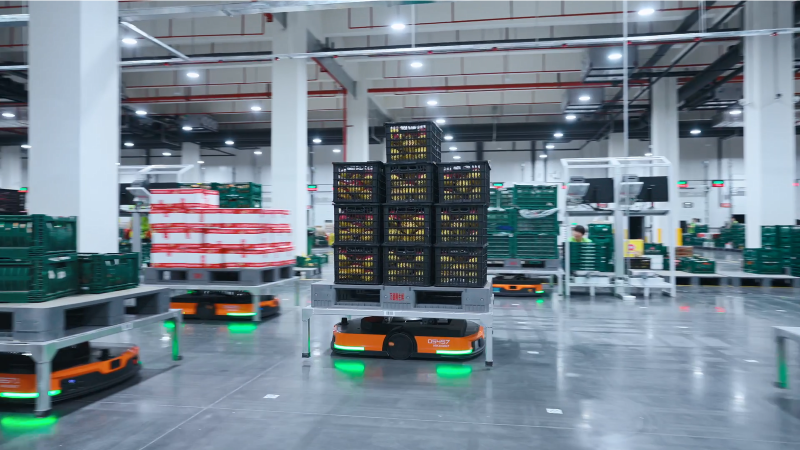
Supported by visual SLAM and inertial navigation, 9 Latent Mobile Robots (LMR) were deployed in the factory of BENTELER Automotive to realize over 300 automated material handling tasks per day from the warehouse to production lines.

Background
The “Kingdom of Snacks”, has increased sales in both its online and offline businesses since 2006. The company operates 2,100 stores in 95 cities in China market, and during one shift, 50,000 boxes of snacks need to be picked. In the online business, 85,000 parcels have to be shipped in one shift.
Solution
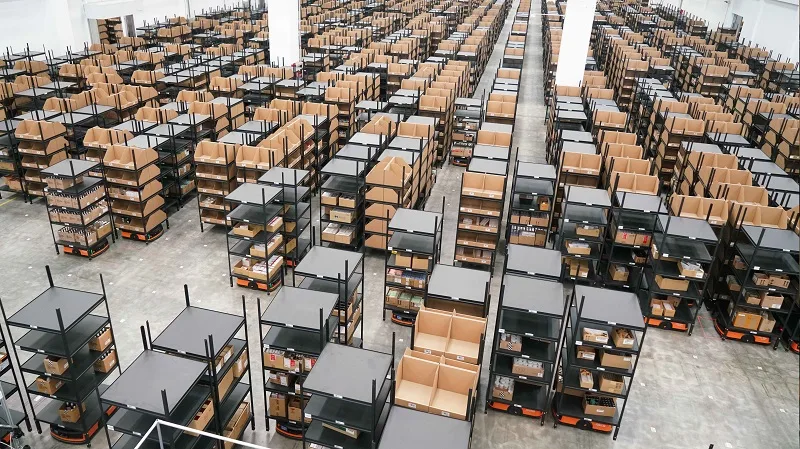
234 AMRs were deployed to cover the inbound delivery, replenishment process, GTP order fulfillment and outbound process across 5 floors in one building. The intelligent AMR solution also seamlessly docks with the vertical warehouse, and automatic conveyors to automate the entire intralogistics flow.
Background
Duty-free shops provide a variety of domestic and foreign commodities, covering cosmetics, clothing, luggage, food, wine, luxury goods, etc.
Solution
The project covers an area of approximately 11,000 square meters, with a total of more than 300 robots and 3 battery swap stations. Hikrobot iWMS system seamlessly connected with the Sunrise General Control System to realise picking, put away, and inventory operations. The solution improves warehouse picking efficiency, and the system is able to respond to massive throughput, processing approximately 150,000 orders per day.
Who should use this ROI calculator?
Manufacturing warehouses with repetitive transport routes

Sites operating 2+ shifts or high daily movement volume

Teams exploring AGVs to improve productivity, reduce labor pressure, and stabilize flow
What is an AGV?
An AGV is a warehouse transport robot that automatically moves materials along planned routes to support consistent internal logistics.
Is payback guaranteed within 24 months?
No. Payback depends on workload, distance, layout, and shift patterns. The ROI estimator provides a fast estimate, and we recommend validation via discussion or on-site simulation for accuracy.
Why do you ask for my details?
So we can provide your detailed ROI summary and support follow-up if you want to validate the estimate.